Tips for Caption Contest 101
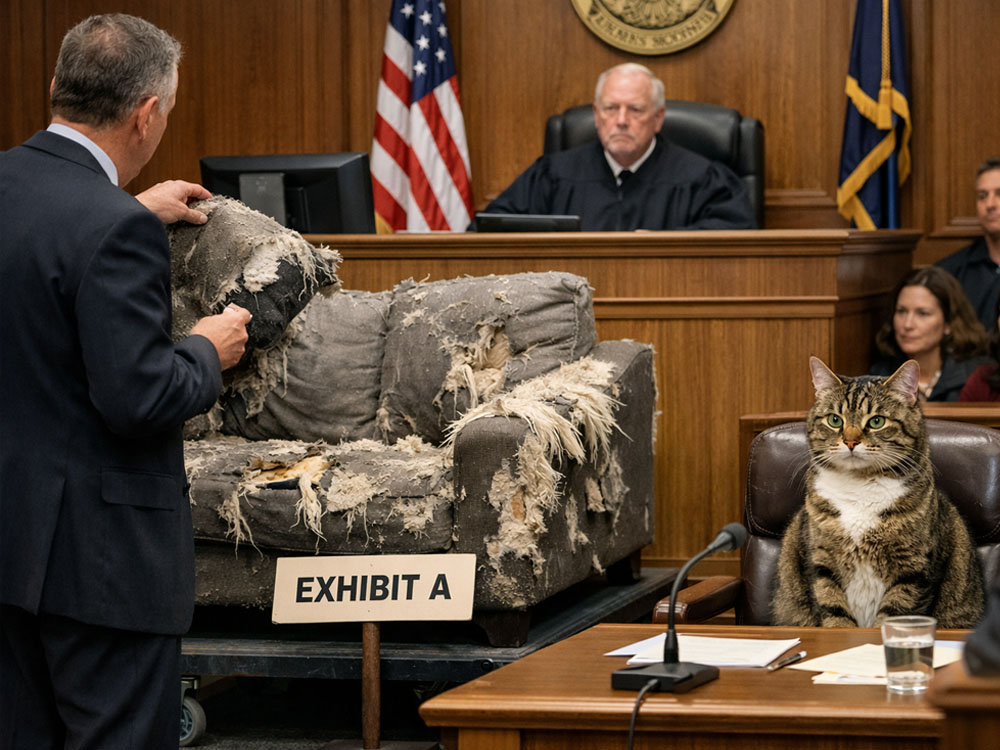
Courtroom sketches usually feature hardened criminals, dramatic pointing, and someone whispering to their lawyer. This one features a cat who absolutely believes the system is rigged.
The prosecution presents a shredded couch as Exhibit A. The defendant presents a face that says, “You have no direct evidence, only vibes.”
You can almost hear the judge sighing while the cat licks its paw mid-trial. Not remorse. Not fear. Just routine maintenance.
This image lives in that perfect space where serious human rituals collide with an animal that has never once respected human rituals.
Getting Started: What’s in the Image?
We’ve got a full legal setup: witness stand, attorneys, judge, and a labeled piece of evidence — the destroyed couch.
And then: a cat. Calm. Alert. Possibly plotting perjury.
Important visual details:
-
The couch is treated like forensic proof, not furniture.
-
The cat is positioned as a conscious participant in the trial.
-
Everyone else is taking this very seriously.
-
The cat is not.
Comedy starts by noticing status differences. Humans operate on rules, procedure, and testimony. Cats operate on impulse and furniture texture preferences.
Example: The defense rests after grooming intermission.
Example: Pleads the fifth nap.
You don’t need complicated jokes yet — just anchor the humor in the mismatch between courtroom gravity and feline logic.
Think Beneath the Surface
Once you’ve covered “cat did crime,” push further.
This isn’t just about destruction — it’s about accountability. Humans built an entire legal framework to process intention, motive, and responsibility. The defendant cannot even process closed doors.
Try angles beyond guilt:
-
Legal technicalities vs animal instinct
-
Anthropomorphism (cat thinking it’s innocent)
-
Humans over-interpreting behavior
-
The cat misunderstanding the purpose of the trial entirely
Example: Admits to scratching but disputes jurisdiction.
Example: Claims couch initiated contact.
You can also reverse perspective. Maybe the cat believes the humans are on trial for owning a bad couch. Maybe the courtroom is just a new elevated surface to sit on.
Good captions don’t stop at “funny situation” — they decide whose reality is correct.
General Tips on How to Be Funny
Be specific, not broad
“Cat on trial” is a premise. “Legal terminology applied precisely wrong” is a joke.
Use the language of the setting
Courtroom vocabulary is your friend: evidence, testimony, objection, precedent, appeal. Precision makes the absurdity sharper.
Example: Objects on grounds of insufficient scratching post.
Let the cat stay a cat
Don’t turn it into a tiny human comedian. The humor improves when the cat behaves exactly like a cat while everyone else behaves like lawyers.
One idea per caption
Stacking multiple punchlines weakens the ruling. Pick the strongest angle and commit.
Short beats land harder
Courtroom comedy works like a verdict: clear, decisive, final. Trim setup words whenever possible.
Surprise comes from perspective
Best outcomes often come from redefining the case — not whether the cat did it, but whether doing it was ever wrong.
Final Thought
Great captions here don’t argue innocence — they redefine the law itself 😼
Enter the contest and present your case to the court of public opinion.