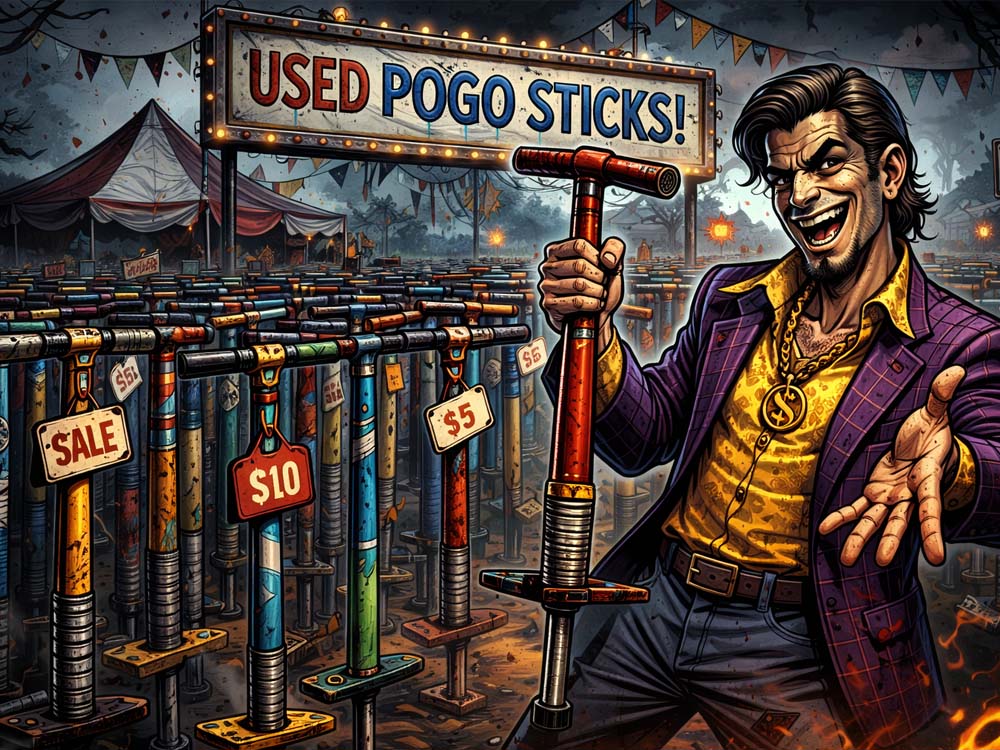
Carnies exist in a very specific emotional ZIP code. Part optimism, part desperation, part “trust me, I swear this worked yesterday.” And this guy? He’s selling used pogo sticks. Not refurbished. Not vintage. Used.
That’s already funny. A pogo stick is a promise. A used pogo stick is a broken promise with fingerprints on it.
The image feels like the saddest corner of a county fair parking lot. Not the Ferris wheel glow. Not the cotton candy joy. Just a folding table, questionable merchandise, and a salesman who definitely has a pitch ready.
This is comedy living in the margins — the stuff happening next to the fun. 🎪
Getting Started: What’s in the Image?
Start by grounding yourself in the literal scene.
There’s a carny — which comes with built-in assumptions: fast talker, temporary employment, questionable ethics, and a lot of confidence doing very little.
He’s selling pogo sticks. Not new ones. Used ones. That detail matters. Wear and tear matters. History matters. Whatever happened on those pogo sticks is still there.
Notice the setup. Likely outdoors. Likely makeshift. Probably a table or rack that suggests “inventory” without actually proving it exists.
Think about posture and expression. Is he proud? Defensive? Salesy? Tired? Does he look like he believes in the product or like he’s already planning his next scam?
And finally: the absence. No visible customers. No kids bouncing. No evidence that pogo sticks are in demand. That silence is loud.
Think Beneath the Surface
This image really shines once you stop thinking about pogo sticks and start thinking about why someone would be selling them.
This is about failed fun. About joy that didn’t pan out. About reselling optimism after it’s already been bounced into the dirt.
There’s also a strong economic undertone. This feels like late-stage capitalism’s carnival booth. Everything has a resale value now — even things designed purely for joy.
You can also play with implied backstory. Where did these pogo sticks come from? Confiscated? Repossessed? Returned after one jump and a bad decision?
Another angle: the mismatch between pitch and reality. Carnies are famous for hype. Used pogo sticks are famous for disappointment. That tension is a gold mine.
And don’t forget the human layer. This isn’t just a bad product — it’s someone trying to sell it anyway. Comedy often lives in that gap between dignity and necessity.
General Tips on How to Be Funny
Be specific early. “Used” is doing a lot of work here — lean into details like condition, history, or implied defects instead of staying vague.
Let the object carry the joke. Pogo sticks are inherently physical and a little ridiculous. Trust that. You don’t need to overdecorate the idea.
Avoid explaining the joke. If the absurdity is clear, let it sit. The best laughs often come from restraint, not escalation.
Play with expectations. Carnies usually sell excitement. This guy is selling the aftermath of excitement. Flip that contrast cleanly.
If you use wordplay, keep it sharp and singular. One clean twist beats three clever-but-messy ones.
Example: A single-line caption that reframes the pogo stick as something it was never meant to be.
Example: A single-line caption that treats this like a high-end, luxury product despite obvious evidence otherwise.
And remember: clarity beats cleverness. If someone has to reread it to understand the premise, the bounce is gone.
Final Thought
This image isn’t about pogo sticks — it’s about what happens after the fun ends, and that’s where some of the best jokes live, so aim low, be precise, and let the sad little bounce do the work. 🙂
Enter your caption now and take your best shot at turning a used pogo stick into a fresh laugh.