Tips for Caption Contest 149
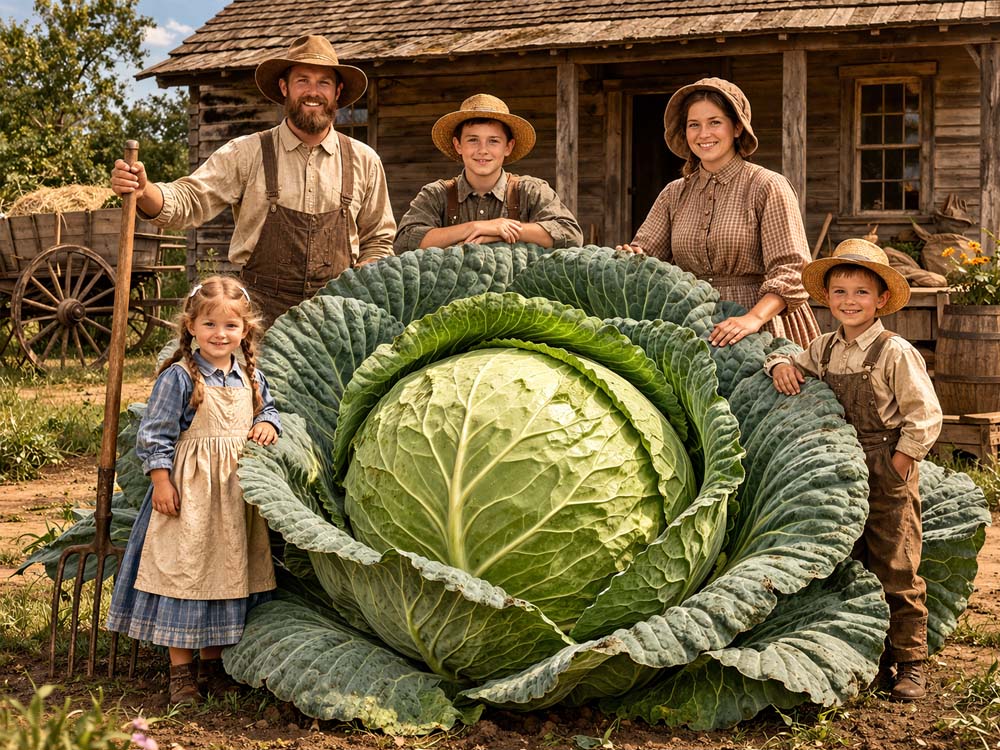
This family didn’t just settle the frontier—they outperformed it. Somewhere between “build a homestead” and “grow some vegetables,” things escalated into “pose proudly with a cabbage the size of a wagon wheel.”
Everyone’s dressed like it’s picture day, which makes the cabbage feel even more official. This isn’t dinner. This is legacy. This is the kind of cabbage that gets mentioned in wills.
You can almost hear the photographer: “Hold still… and try to look like this is normal.” It’s not. And that’s where the comedy lives.
Getting Started: What’s in the Image?
Start with the literal.
A pioneer family—likely 1800s-era—posed stiffly for a formal portrait. Period clothing, serious expressions, the whole “life is hard and we don’t smile for cameras” vibe.
Front and center: an enormous cabbage. Not just big—absurdly big. It dwarfs expectations and competes with the people for attention.
Key details to notice:
- The pride in their posture—this cabbage is an achievement
- The scale mismatch between humans and produce
- The formal tone of the photo vs. the ridiculous subject
- The implication that this is worth documenting forever
The joke engine here is contrast: seriousness vs. silliness, effort vs. outcome, history vs. absurdity.
Think Beneath the Surface
Now move past “big cabbage” and ask: why is this funny?
First, there’s misplaced importance. They’re treating a vegetable like a milestone. That opens doors to jokes about legacy, family pride, or overblown accomplishments.
Second, there’s pioneer hardship vs. payoff. These people likely endured brutal conditions—and this is the trophy? That contrast can fuel irony.
Third, think about modern framing. What would today’s world do with this cabbage? Social media? Influencers? Competitive farming? Suddenly the image becomes timeless.
Example: This would’ve crushed on early Instagram.
There’s also room for category confusion:
- Is this agriculture or achievement?
- Is this food or a family member?
- Is this a harvest or a personality trait?
And don’t overlook scale absurdity. Comedy often comes from something being just slightly too big. This cabbage blows past “slightly.”
Example: When your side dish becomes the main character.
General Tips on How to Be Funny
1. Anchor the joke in reality, then twist it.
Start with what’s true (pioneers, farming, pride), then push it one step too far. The best captions feel grounded before they surprise.
2. Let the cabbage do the work.
You don’t need to invent something funnier than a giant cabbage. Your job is to frame it—give it meaning, context, or stakes.
3. Use contrast as your engine.
Serious tone + ridiculous object = strong setup. Keep one side straight, let the other side break.
Example: Formal portrait, informal achievement.
4. Be specific, not generic.
“Big vegetable” is weak. “Largest cabbage in three counties” is better. Specificity adds credibility, which makes the absurdity hit harder.
5. Avoid over-explaining the joke.
Trust the image. If you spell out why it’s funny, you flatten it. Let the audience connect the dots.
6. Play with time periods.
Blend old and new. Modern language in a historical setting—or vice versa—can create sharp contrast.
Example: Frontier’s first viral post.
7. Give the cabbage a role.
Object → character. Is it a status symbol? A burden? A problem? A child substitute? Assigning a role sharpens the joke.
Example: Finally, a crop that can pay rent.
8. Keep it tight.
Shorter captions tend to land better. One clear idea, one clean punch. If there are two jokes competing, pick the stronger one.
Final Thought
This image is doing you a favor—it’s already strange, already specific, already memorable. Your job isn’t to out-weird it, just to aim the weirdness in a smart direction and let it land. 🌱
Write your best caption and enter the contest.